
Simple Lowrey Organ Repairs You Can Do Yourself
Vintage Lowrey organs are built to last, but decades of use mean contacts get dirty, solder joints age, and small faults creep in. The good news: most common Lowrey problems come down to a handful of repeatable, low-risk fixes you can do at home with basic tools — no technician required. Here’s where to start.
A quick safety note first: always unplug the organ before opening any panel or spraying contact cleaner near internal components. These are mains-powered instruments, and capacitors inside can hold a charge even after the power is off.
1. Start With the Basics
Before touching a screwdriver, rule out the obvious. Is the organ plugged into a live outlet? Is the power switch fully engaged? Is the volume/expression pedal properly connected, and is anything plugged into a headphone jack that might be muting the main output? A surprising number of “dead” organs turn out to be a loose cord or a pedal that isn’t making contact.
2. Check the Fuse
Lowrey organs typically have one or more internal fuses, usually located near where the power cord enters the unit. If the organ won’t power on at all — but you know it’s getting electricity — pull the fuse and test it with a multimeter, or simply hold it up to the light to check whether the filament is broken. Replace it with a fuse of the exact same amperage rating; never substitute a higher-rated fuse.
3. Clean Dirty or Unresponsive Key Contacts
This is, by far, the single most common Lowrey repair — and the one most worth learning. If certain keys are silent, crackly, or only sound intermittently, the cause is almost always oxidized or dirty key contacts rather than a deeper electronic fault.
To fix it:
- Remove the top panel or key cover according to your model
- Spray electronic contact cleaner directly onto the contact points (never use WD-40 or general household lubricants — they attract dust and can damage components)
- Work the key up and down 20–30 times to work the cleaner into the contact
- Test the note, and repeat if crackling or dropout persists
Key contacts are essentially bare wires touching horizontal “buss bars” that carry each note’s signal to the tone circuitry — cleaning both the contact and the bar it touches gives the best results.
4. Clean Noisy Tab (Rocker) Switches
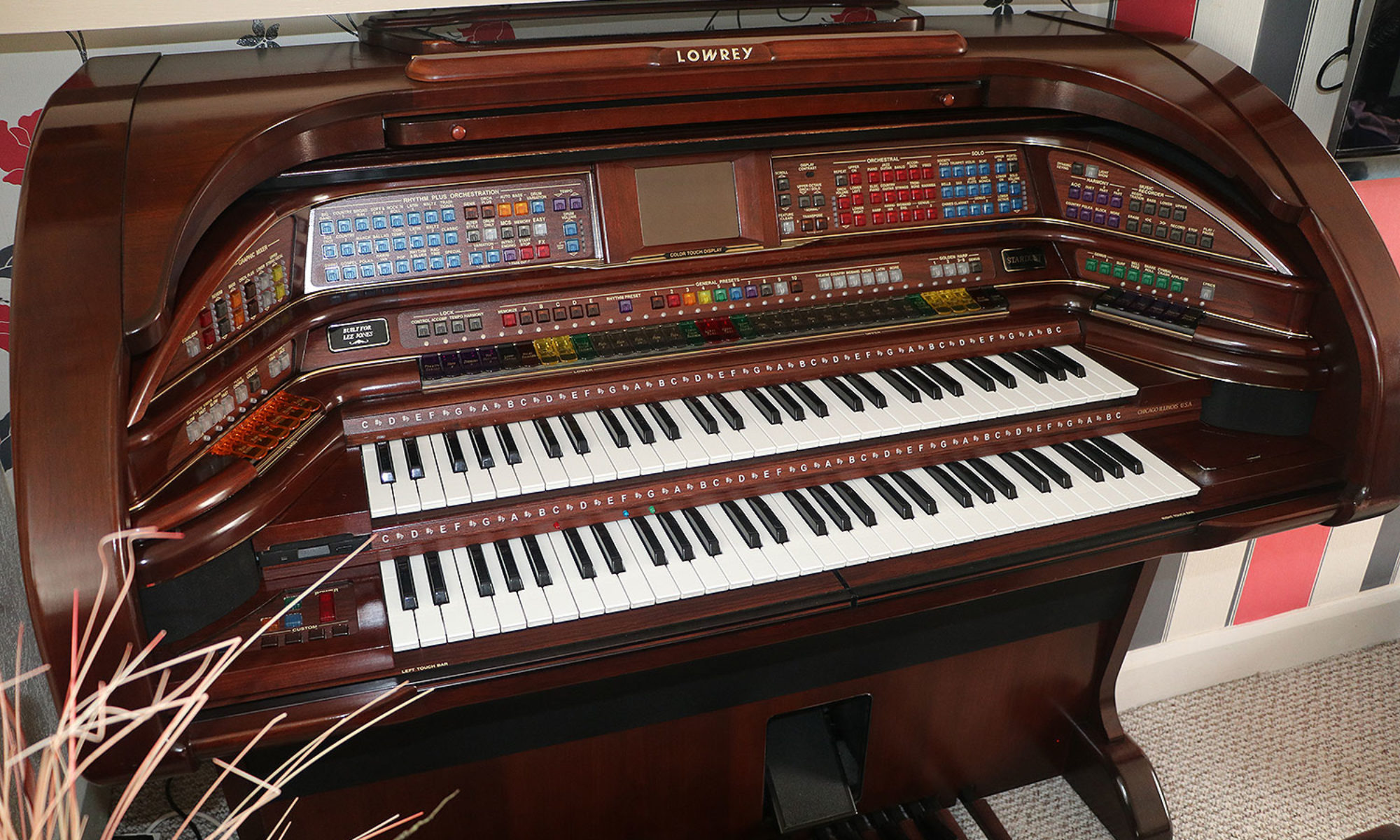
The voice selector tabs — piano, flute, horn, guitar, and so on — are rocker switches that accumulate the same kind of grime over time, causing static, crackling, or a voice that won’t engage at all. The fix mirrors the key contact repair: spray contact cleaner into the switch body, then flip the rocker back and forth rapidly 20–30 times before testing again.
5. Trace a Truly Dead Note
If cleaning doesn’t revive a specific note, the next step is isolating where the signal is actually getting lost. A simple signal tracer — a probe connected to an amplifier — lets you follow the note’s path from the key contact toward the tone generator board. Wherever the sound disappears tells you whether the fault lies in the contact itself, the buss bar, or the tone generator circuit further downstream.
6. Check for Loose or Cold Solder Joints
If a key or switch works only when you jiggle the organ, or only when you press near certain internal components, suspect a cracked or “cold” solder joint on the control board rather than the contact itself. Cold joints often look dull, cracked, or grainy compared to the smooth, shiny look of a good joint. If you’re comfortable with a soldering iron, re-flowing the joint is usually enough to restore a solid connection.
7. Know When to Call a Technician
Some issues sit outside reasonable DIY territory: aging capacitors in the tone-generation circuitry, a failed tone generator board, or deeper power-supply faults often need specific replacement parts and diagnostic experience with vintage electronic organs. If cleaning contacts, checking the fuse, and inspecting solder joints hasn’t solved the problem, that’s the natural point to bring in a specialist experienced with Lowrey instruments rather than risk further damage by going further on your own.
The Bottom Line
Most everyday Lowrey organ gremlins — crackling notes, dead keys, unresponsive voice tabs — trace back to dirty contacts rather than failed electronics. A can of contact cleaner, a little patience, and some methodical testing will resolve the majority of issues owners run into. Anything involving internal boards, capacitors, or persistent electronic faults is the right moment to hand things off to a technician who specializes in vintage organs.